Introduction
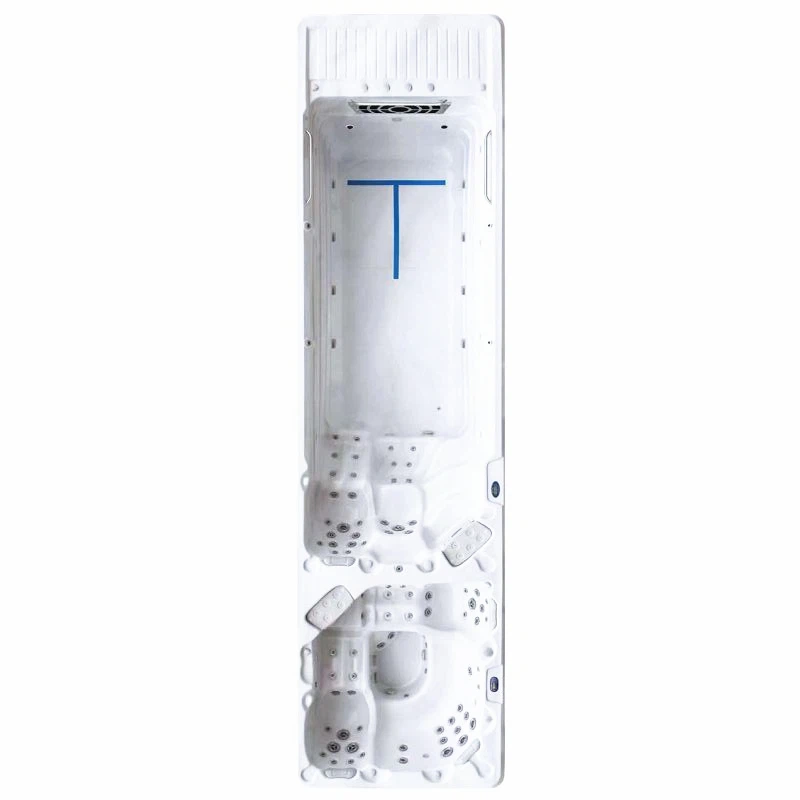
In a compact 2 person hot tub, comfort depends on more than the number of jets installed. Jet placement, seating position, water flow, and body contact points work together to determine the quality of the hydrotherapy experience. A 14-jet, 2-seat-and-1-lounger configuration provides a useful example of how careful spatial planning can create targeted massage coverage within a 180 × 120 × 71 cm footprint.

Why Jet Placement Matters More Than Jet Count
A higher number of hot tub jets does not automatically produce a better massage experience. What matters is whether each jet is positioned where the body can receive useful water pressure and whether the overall jet configuration creates balanced coverage rather than simply increasing the number of outlets.
This becomes particularly important in a compact 2 person hot tub, where every seating position has a defined relationship with the shell and available space. Effective hot tub jet placement therefore needs to be planned together with the seating geometry, body position, and intended hydrotherapy zones.
How the 2 Seats + 1 Lounger Layout Changes Jet Coverage
The relationship between hot tub seating and jet positioning determines how water reaches different areas of the body. In a compact design, the seating arrangement provides the foundation for organizing the available massage zones.
- Lounger Position: A lounger creates a longer contact area for the back, waist, and legs, allowing jets to follow a more continuous massage path along the body.
- Seated Positions: The two seats provide more upright body positioning, making them suitable for concentrated water contact around the shoulders, back, and waist.
- Position Switching: A 2 Seats + 1 Lounger configuration gives two users the option to change between seated and reclining positions, creating different jet contact points without requiring a larger footprint.
Where Jet Placement Matters on the Body
For a well-designed hydrotherapy system, jet positioning should correspond to the body's
natural contact areas rather than being distributed evenly across the shell.
|
Body Area |
Preferred Jet Placement |
Comfort Objective |
|
Shoulders |
Upper Back / Shoulder Zone |
Targeted Upper-body Massage |
|
Back |
Mid & Lower Back |
Continuous Back Support |
|
Waist |
Lower Back / Waist Area |
Focused Lumbar Massage |
|
Legs |
Along Lounger Position |
Extended Lower-body Coverage |
|
Feet |
Footwell Area |
Localized Foot Massage |
This approach allows hot tub massage jets to support targeted massage while working with the user's actual seating or reclining position.
How Jet Placement Works With Water Pressure
Jet placement must also work with the hydraulic system behind it. The 14-jet configuration in this model is paired with a 2HP two-speed pump, creating a system where the number and location of jets are considered together rather than evaluated separately.
The sensation users experience also depends on jet type, water-flow adjustment, and air regulation. A well-balanced 14-jet configuration can provide more targeted hydrotherapy than a poorly distributed high-jet-count design, while adjustable flow allows users to choose a more suitable massage intensity.
2HP 2SPD of High-Performance Pumps


Why Roto Molding Can Support Comfortable Jet Integration
The shell manufacturing method also influences how seating contours and jet openings can be integrated into the overall design. Roto molding produces a seamless LLDPE shell, providing a continuous structure around the internal seating and hydrotherapy areas.

Seamless Shell Construction
A continuous shell structure allows seat contours, rounded edges, and jet openings to be developed as part of the overall mold design.

Ergonomic Seating
Seat and lounger geometry can be coordinated with jet positioning so the body remains appropriately aligned with the massage zones.

Easy-Clean Surface
The non-porous plastic surface supports routine cleaning, which helps maintain a comfortable experience in regular-use environments.
Compact Dimensions Without Sacrificing Hydrotherapy Experience
At 180 × 120 × 71 cm, this compact hot tub is designed around efficient use of space rather than simply reducing the overall size. Its footprint can suit smaller outdoor areas, private terraces, couples, and buyers who want hydrotherapy without allocating space to a larger spa.
The key is how the available space is organized. Combining 2 Seats + 1 Lounger with 14 jets creates several distinct body-contact zones within a relatively compact footprint, allowing the design to deliver different seated and reclining experiences without requiring a large installation area.
Comfort Also Includes Installation and Daily Operation
For many buyers, comfort starts before the first hydrotherapy session. Installation, controls, and
routine operation can influence how convenient the hot tub is to use.
|
Feature |
User Benefit |
|
15A Plug & Play GFCI |
Simplified Electrical Setup |
|
110V / 220V |
Flexible Electrical Compatibility |
|
BALBOA Control System |
Convenient Operation |
|
Air Regulator |
Adjustable Massage Sensation |
|
Energy-Saving Cover |
Easier Heat Retention |
What Buyers Should Evaluate in a 2 Person Hot Tub
When comparing a 2 person hot tub, buyers should evaluate the complete relationship between jet positioning, seating, hydraulics, shell construction, and installation requirements. From a manufacturer perspective, Bestview Spa applies these considerations to its compact hot tub designs, giving buyers a practical framework for evaluating hydrotherapy performance beyond jet count alone.
|
Evaluation Point |
What to Check |
|
Jet Placement |
Body Coverage & Seating Alignment |
|
Jet Count |
Overall Configuration Rather Than Quantity Alone |
|
Seating |
Seats, Lounger & Body Positioning |
|
Pump |
Water Flow Matched to Jet Configuration |
|
Shell |
Ergonomic Shape & Seamless Construction |
|
Controls |
Flow & Air Adjustment |
|
Size |
Fit for the Intended Installation Space |
For dealers, importers, and project buyers, these criteria provide a more practical basis for comparing hydrotherapy performance than jet count alone.


Conclusion
For a compact hot tub, comfort is created through the coordinated design of jet placement, seating position, water pressure, and ergonomics, rather than by simply increasing the number of jets. A well-planned 14-jet, 2 Seats + 1 Lounger configuration demonstrates how thoughtful use of a limited footprint can create targeted hydrotherapy zones while maintaining the convenience expected from a modern 2 person hot tub. If you are looking for a suitable 2 person hot tub jet placement configuration, feel free to contact our experts for a tailored recommendation.