

Introduction
Choosing a reliable roto molded hot tub manufacturer requires more than comparing product designs and factory prices, especially for distributors, hospitality buyers, and private-label brands sourcing from overseas suppliers. Differences in raw material quality, molding precision, component sourcing, and production management can directly affect product reliability, delivery schedules, and long-term operating costs. Before placing a bulk order, buyers should evaluate 6 key areas to determine whether a manufacturer has the technical capabilities, supply chain resources, and after-sales support needed for a sustainable business partnership.

1. Evaluate the Manufacturer's Molding Process and Material Quality
The quality of a rotomolded hot tub starts with its raw materials, mold engineering, and control over each manufacturing stage, so buyers should examine the following aspects before assessing the finished product.
Raw Material Selection
Check whether the manufacturer uses suitable LLDPE resin with UV stabilizers, and request material specifications or weather-resistance test results to verify its suitability for prolonged outdoor exposure, temperature fluctuations, and repeated chemical contact.

Mold Design & Precision
Ask whether the factory develops molds using 3D CAD software and engineering simulations, as accurate mold geometry directly affects shell dimensions, wall distribution, structural details, and consistency across production batches.

Rotational Molding Process
Review how the manufacturer controls material preparation, heating, mold rotation, cooling, and demolding, particularly how it maintains uniform wall thickness and avoids weak areas caused by inconsistent material distribution.

Shell Finishing & Machining
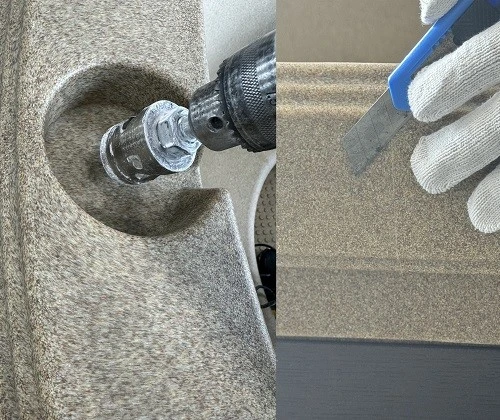
Check whether the factory uses precision CNC equipment for trimming, drilling, and polishing, since poorly finished edges, inaccurate jet openings, and inconsistent dimensions can complicate subsequent assembly.

A capable manufacturer should be able to explain its complete process, from mold development to finished shell inspection, rather than simply showing production equipment or finished product photographs.
2. Check the Quality and Compatibility of Core Spa Components
A durable shell alone cannot guarantee reliable spa operation, so buyers should examine the brands, specifications, and compatibility of the electrical, circulation, and water-treatment components.
Control Systems
Check whether the manufacturer offers established systems such as Balboa and can configure controllers for the voltage and frequency requirements of your target market, while considering local replacement-part availability and technical support.

Pumps & Filtration Systems
Compare pump brands, horsepower, speed settings, operating noise, and circulation performance, and verify whether the filtration system includes suitable skimmers or floating filters for collecting debris and maintaining water circulation.

Water Treatment Options
Ask whether ozone sanitation is available to supplement conventional water treatment, and confirm how the system integrates with filtration equipment and the spa's overall circulation design.

Electrical Configuration & Protection
Verify the availability of appropriate GFCI protection, wiring configurations, and electrical components for the intended installation environment, particularly when supplying products to markets with different power standards.
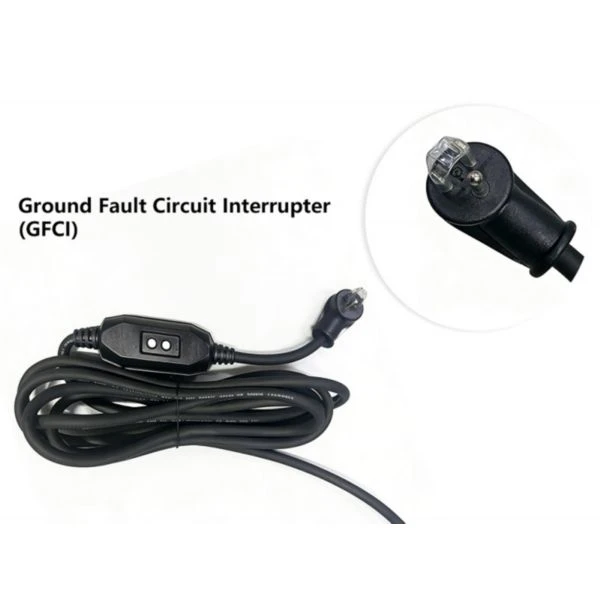
The manufacturer should provide a clear component list showing brand names, model specifications, optional configurations, and available alternatives rather than relying on general descriptions such as premium components.
3. Assess Product Range and OEM/ODM Capabilities
A suitable manufacturing partner should offer enough product variety and customization flexibility to help buyers serve different customer groups without developing an entirely new product for every market.
Product Range
Compare available models by dimensions, seating capacity, seat layouts, and overall configurations to determine whether the manufacturer can support different price points and customer requirements.
Application-Specific Models
Look for established product options for vacation rentals, hotels, resorts, residential properties, and commercial wellness facilities, as each application may require different seating arrangements, operating configurations, and installation considerations.
Electrical Options
Check whether the product range includes 120V, 240V, and other market-appropriate electrical configurations, allowing distributors to select models that match local installation conditions.
OEM/ODM Customization
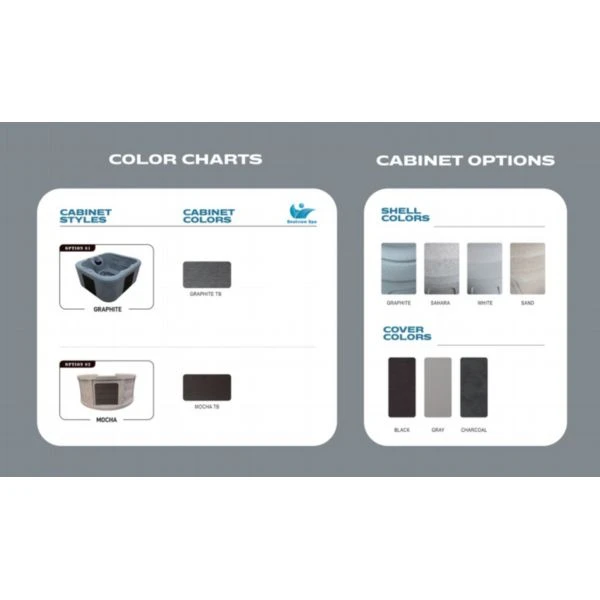
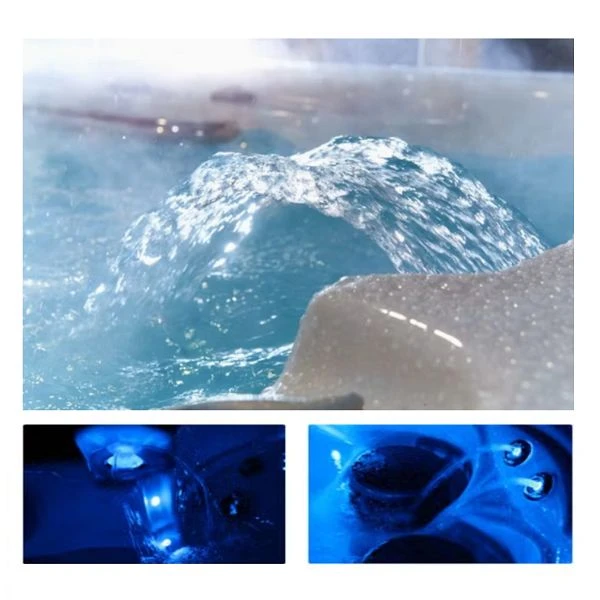
Confirm whether the factory supports changes to shell and cabinet colors, seating layouts, jet configurations, LED lighting, waterfalls, WiFi controls, private logos, and export packaging.
Buyers should also clarify which modifications are available on existing models and which require new mold development, as the latter may involve additional tooling costs, development time, and minimum order requirements.
4. Verify Production Capacity and Export Fulfillment
Production capacity is not simply a measure of factory size; buyers need to determine whether the manufacturer can allocate sufficient resources to their orders and complete international shipments on schedule.
- Factory Scale & Production Capacity: Examine the factory's production area, equipment, workforce, and monthly output, while asking for capacity figures specific to the relevant product category rather than relying solely on the manufacturer's total output.
- Production Efficiency: Review the use of automated handling systems, internal material transportation, and production scheduling to understand how efficiently the factory moves products between manufacturing stations and manages larger orders.
- Bulk Order Management: Ask how the manufacturer handles seasonal demand, repeat orders, production priorities, and capacity allocation, particularly when your business depends on stocking inventory before peak sales periods.
- Container Loading & Export Arrangements: Since roto molded hot tubs generally cannot be nested like stackable products, request container-loading plans, estimated loading quantities, protective packaging details, and previous export experience to assess transportation costs.
- Lead Time & Order Fulfillment: Confirm separate production schedules for samples, initial orders, and repeat bulk orders, and ask how the factory manages delivery commitments when several customers place orders during the same peak season.
A useful factory assessment should distinguish between installed production capacity, actual monthly output, and the capacity available for your specific order.
5. Verify Product Certifications and Quality Assurance
Before importing hot tubs, buyers should confirm that the selected models meet the applicable safety and compliance requirements of their destination markets and that the manufacturer can provide supporting inspection records.
Market-Specific Certifications
Check whether the manufacturer holds relevant CE, ETL, SAA, RoHS, or TÜV certifications, depending on the product configuration, applicable regulations, and intended sales market.
Certification Verification
Request copies of certificates and supporting test documents, then verify the covered product models, electrical specifications, applicable standards, and certificate validity rather than relying on certification logos displayed in a catalog.
Factory Quality Inspection
Ask whether finished products undergo appearance checks, dimensional inspections, water-tightness testing, and electrical system testing before shipment, with inspection procedures appropriate to the product configuration.
Inspection Records & Traceability
Confirm whether the factory maintains inspection records, identifies nonconforming products, and documents corrective actions so that recurring quality issues can be traced and addressed.
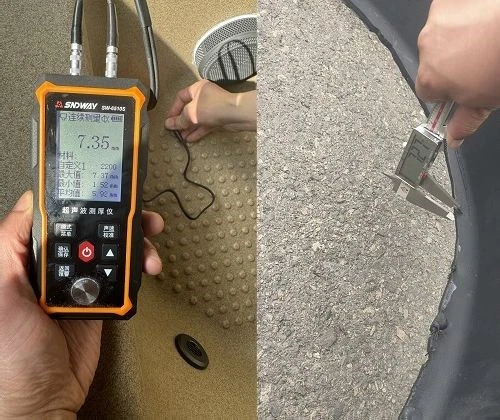
For international buyers, certification coverage and actual product testing should be assessed separately because a factory's general compliance credentials do not automatically establish that every model meets every destination-market requirement.
6. Review Warranty Coverage and After-Sales Support
Warranty terms and technical support determine how much responsibility the manufacturer accepts after delivery, making them important considerations for distributors and commercial project buyers.
Warranty Coverage
Compare warranty periods for the spa structure, shell surface, pumps, jets, controllers, electrical components, and covers instead of treating the entire hot tub as one warranty item.
Warranty Conditions
Check whether coverage is prorated, which defects are excluded, how claims must be documented, and whether transportation or replacement-part costs are covered under different circumstances.
Spare Parts Availability
Ask whether commonly replaced components can be supplied separately and whether the manufacturer can maintain compatible replacement parts for models already sold into overseas markets.
Technical Support
Evaluate the availability of installation instructions, troubleshooting documentation, remote technical assistance, and practical guidance for local service teams handling maintenance or repairs.
Bestview Spa provides a 10-year prorated warranty for spa structures, a 3-year prorated warranty for shell surfaces, and 2-year coverage for jets, covers, controllers, electrical parts, and cabinets. Its product supply and support capabilities also include factory-direct manufacturing, OEM/ODM customization, and assistance with export orders, giving international buyers several areas to evaluate when considering a long-term supply partnership.

Conclusion
Choosing the right roto molded hot tub manufacturer requires a thorough assessment of manufacturing quality, component compatibility, customization capabilities, production capacity, compliance, and after-sales support. Buyers who verify these areas before ordering are better positioned to avoid supply chain disruptions, unexpected maintenance costs, and product compliance issues. Contact our team to request a wholesale product catalog, discuss bulk pricing, or explore OEM/ODM opportunities for your target market.
Put Us into Your Manufacturer Checklists
FAQ
Q: What Is the Difference Between a Rotomolded Hot Tub Manufacturer and an Acrylic Hot Tub Manufacturer?
A: Rotomolded hot tubs use heated polymer powder and rotating molds to create one-piece LLDPE shells, while acrylic hot tubs generally use formed acrylic sheets with additional structural reinforcement and assembly.
Q: Can a Roto Molded Hot Tub Manufacturer Produce Private Label Products?
A: Yes, qualified manufacturers can offer private-label services covering product colors, configurations, branding, logos, and packaging, depending on their OEM/ODM capabilities and minimum order requirements.
Q: What Information Should I Provide When Requesting a Wholesale Hot Tub Quote?
A: Provide your preferred models, order quantities, destination market, electrical requirements, component configurations, branding preferences, packaging requirements, and expected delivery schedule to obtain a more accurate quotation.


