


Introduction
For global rotomolded hot tub buyers, choosing the right electrical configuration is not simply a technical decision because voltage and frequency can affect installation, product compliance, operating performance, and customer acceptance. While 120V configurations are widely associated with plug-and-play use in North America, 240V configurations are common across Europe, Australia, and New Zealand and are also available for higher-power applications in North America. For distributors and bulk buyers, the right choice is therefore the configuration that matches the target market, electrical environment, application, and local compliance requirements.

What Is the Difference Between 120V and 240V Hot Tubs
Although commonly searched as 120V vs 240V hot tub, the practical comparison should also consider
frequency, installation requirements, and the electrical configuration of the specific model.
|
Parameter |
120V Configuration |
240V Configuration |
|
Typical Frequency |
60Hz |
50Hz / 60Hz |
|
Installation |
Plug-and-play on Compatible Models |
240V Electrical Connection |
|
Available Power |
More Limited by Household Circuit Capacity |
Greater Available Electrical Power |
|
Operation |
Suitable for Compatible Residential Applications |
Suitable for Higher-Power Configurations |
|
Typical Markets |
North America |
Europe, Australia, New Zealand & North American Applications |
|
Main Advantage |
Installation Convenience |
Greater Power Availability |
The key difference is not that one voltage is universally more efficient, but that each configuration provides different installation and performance possibilities depending on the product and local electrical system.
When Does a 120V Plug-and-Play Hot Tub Fit the North American Market
A 120V configuration can be attractive for North American buyers when installation convenience and
compatibility with residential electrical infrastructure are important purchasing factors.
Plug-and-Play Installation
Compatible plug-and-play models can connect to a suitable household outlet, reducing the need for extensive electrical modifications during installation.
Residential & Rental Applications
120V hot tubs can suit residential backyards, smaller properties, and rental applications where buyers value simpler installation and flexible placement.
Electrical Capacity
Buyers should still verify the required circuit capacity and product specifications because plug-and-play capability does not mean that every 120V model has the same electrical requirements.
When Is 240V the Better Configuration For the North American Market
A 240V system can be more suitable when the application requires greater available electrical power
or when the target market already uses this voltage as its standard residential supply.
Greater Available Power
Higher-voltage configurations can provide more electrical capacity for appropriately designed heating, pumping, and hydrotherapy systems.
Higher-Performance Operation
For models with greater heating or massage requirements, 240V can provide more flexibility for operating multiple functions within the product's designed electrical capacity.
North American 240V Applications
North American distributors can also consider 240V models when targeting customers who prefer higher-performance installations rather than limiting their product range to plug-and-play configurations.
Which Voltage Configuration Fits Each Global Market
Market selection should begin with the destination country's electrical infrastructure and then
consider the intended customer segment, installation environment, performance
requirements, and applicable certifications.
North America
Distributors can offer 120V/60Hz plug-and-play models for installation convenience while also considering 240V/60Hz configurations for applications requiring greater available electrical power.
Europe & UK
240V/50Hz configurations generally align more closely with the regional electrical environment, making voltage, frequency, CE compliance, and installation requirements important purchasing considerations.
Australia & New Zealand
240V/50Hz configurations are generally aligned with the local electrical supply, while buyers should also verify applicable electrical certifications and market-specific compliance requirements.
What Should B2B Buyers Verify Before Choosing a Voltage Configuration
Before placing an order, buyers should evaluate the complete electrical specification rather
than selecting a product based only on its headline voltage.
Target Market
Confirm the destination country and intended application before deciding whether a 120V or 240V configuration is appropriate.
01
Frequency
Verify whether the target market requires 50Hz or 60Hz and ensure that the heater, pump, control system, and other electrical components are compatible.
02
Electrical Components
Check the control system, heater, pump, plug or connection method, circuit requirements, and electrical protection as one integrated system.
03
Certification
Confirm that the selected configuration has the certifications and documentation required for the target market, such as ETL, CE, TUV, RoHS, SAA, or other applicable approvals.
04
How Can Suppliers Support Multi-Market Hot Tub Programs
A supplier serving multiple international markets should be able to adapt electrical configurations while maintaining consistent product specifications, quality standards, and production processes. Bestview Spa supports multi-market sourcing through different voltage and frequency configurations, OEM/ODM customization, and product options covering controls, jets, filtration, insulation, lighting, and branding.
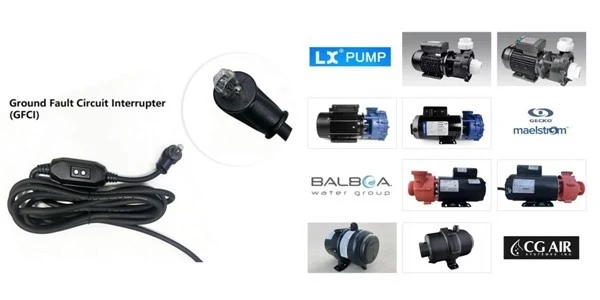
Multiple Electrical Configurations
Suppliers should be able to provide suitable voltage and frequency combinations for different destination markets instead of forcing distributors to adapt one standard configuration to every country.

OEM/ODM Customization
Flexible manufacturing can allow buyers to customize product specifications and functional configurations according to local market positioning and customer requirements.
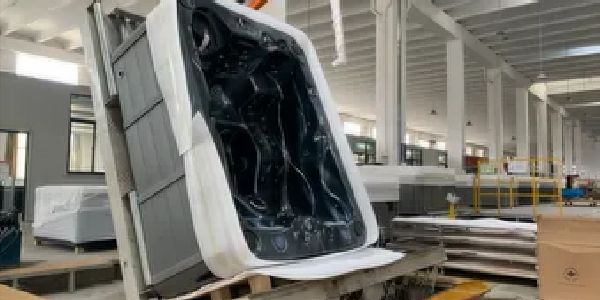
Global Compliance Support
Suppliers should help buyers align product configurations and certification requirements with the electrical and regulatory expectations of their target markets.
Conclusion
There is no universally better voltage for a rotomolded hot tub because the appropriate configuration depends on the destination market, electrical infrastructure, installation conditions, and required performance. For global distributors, comparing 120V/60Hz and 240V/50Hz or 60Hz configurations as part of a complete product specification can reduce installation and compliance risks while supporting better market positioning. If you are planning a multi-market rotomolded hot tub program, contact us to discuss voltage, frequency, certification, and OEM/ODM requirements for your target markets.


